Table of Contents
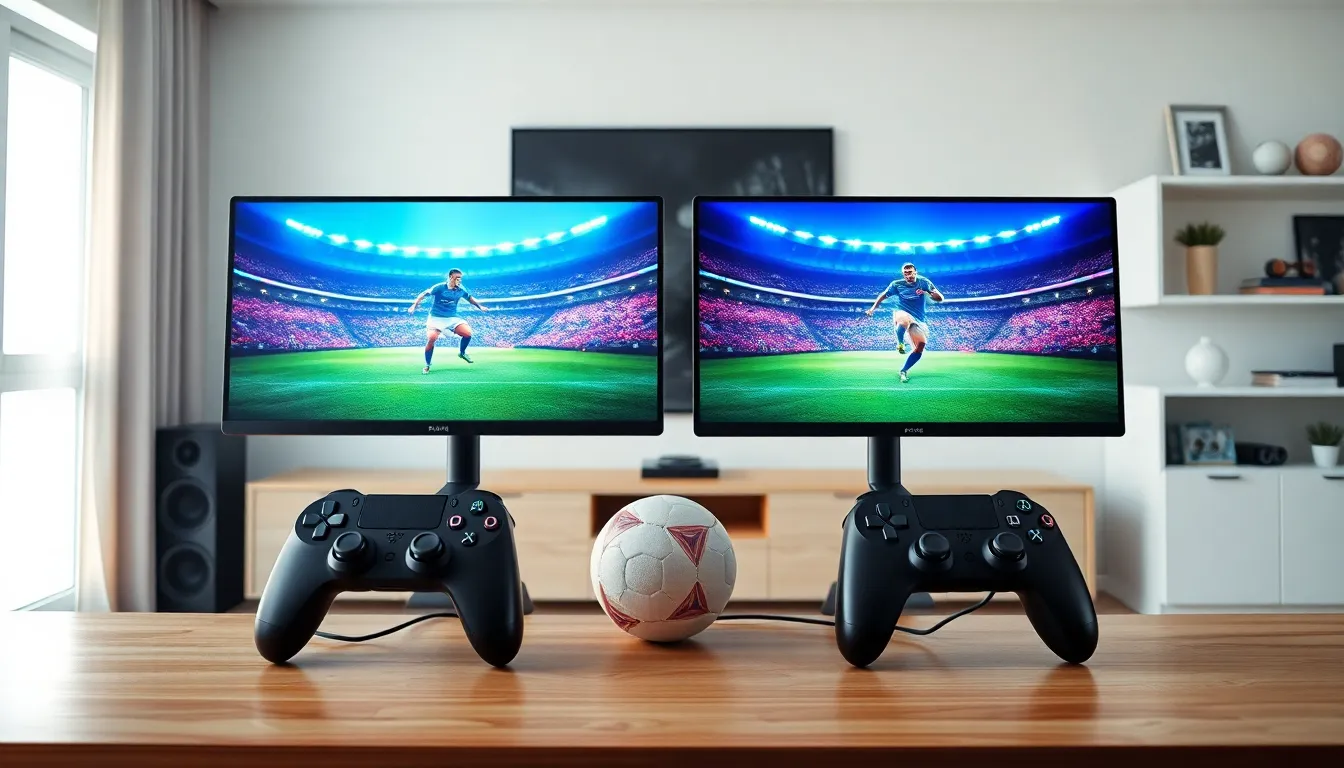
ToggleFIFA vs PES remains one of gaming’s most heated debates. Both franchises have shaped soccer video games for decades, and each brings something different to the pitch. EA Sports FC (formerly FIFA) dominates global sales, while eFootball (formerly PES) has carved out a loyal fanbase with its gameplay-first approach. Choosing between them depends on what players value most: official licenses, realistic ball physics, or specific game modes. This guide breaks down the key differences between FIFA vs PES across gameplay, licensing, features, and graphics. By the end, readers will know exactly which soccer game fits their style.
Key Takeaways
- FIFA vs PES comes down to personal priorities: FIFA offers superior licensing and polished presentation, while PES delivers more realistic gameplay mechanics.
- EA Sports FC (FIFA) holds exclusive rights to major leagues like the Premier League and La Liga, making it the go-to choice for players who want authentic team names and stadiums.
- PES (now eFootball) emphasizes weighted ball physics and deliberate player movement, appealing to hardcore fans who prefer simulation over arcade-style action.
- Ultimate Team dominates FIFA’s content ecosystem, while PES’s Master League offers deep offline career management without aggressive microtransactions.
- eFootball is free-to-play, removing the $60-70 entry barrier and letting players test Konami’s gameplay without financial commitment.
- PC gamers can get the best of both worlds by using PES with community mod packs that add real team names, kits, and logos.
Core Gameplay Differences
The FIFA vs PES debate often starts with how the ball moves. FIFA has historically favored faster, more arcade-style action. Matches flow quickly, and players can execute flashy skill moves with simple button combinations. This accessibility makes FIFA appealing to casual gamers who want instant fun.
PES, now called eFootball, takes a different path. Konami’s franchise emphasizes weight, momentum, and realistic player movement. Passing feels deliberate. Dribbling requires more precision. Many hardcore fans argue that PES delivers a more authentic soccer experience because of these mechanical choices.
Player switching also differs between the two games. FIFA’s AI tends to be more forgiving, automatically positioning defenders in helpful spots. PES demands more manual control, which can frustrate beginners but rewards skilled players.
Shot mechanics showcase another split. FIFA allows for timed finishing systems that add skill layers to scoring. PES relies more on positioning and power gauges that feel closer to classic soccer games. Neither approach is objectively better, it comes down to personal preference.
The FIFA vs PES gameplay gap has narrowed over recent years. Both developers have borrowed ideas from each other. Still, FIFA leans toward entertainment value, while PES prioritizes simulation.
Licensing and Official Teams
Licensing creates the biggest visible difference in the FIFA vs PES matchup. EA Sports holds exclusive rights to the FIFA name (until recently), the Premier League, La Liga, Bundesliga, and hundreds of other leagues. Players see real team names, authentic kits, and accurate stadiums.
PES has struggled with licensing for years. Konami lost the Champions League rights in 2019 and relies heavily on partner clubs like Barcelona, Manchester United, and Bayern Munich. Many leagues appear with fake names, Serie A becomes “Italian League,” for example.
This gap matters to fans who want immersion. Playing as “Manchester Red” instead of Manchester United breaks the fantasy for some gamers. But, PES communities have created extensive mod packs that add real names, kits, and logos on PC.
FIFA’s licensing advantage extends to national teams too. World Cup and European Championship content appears exclusively in EA’s franchise. For players who love international tournaments, FIFA vs PES isn’t much of a contest here.
Konami has secured some exclusive deals, though. They hold rights to Juventus (called Piemonte Calcio in FIFA), AS Roma, and several South American leagues. These partnerships help PES compete in specific markets.
Game Modes and Features
Game modes often decide the FIFA vs PES winner for individual players. FIFA offers Ultimate Team, Career Mode, Pro Clubs, and Volta Football. Each mode provides dozens of hours of content.
Ultimate Team dominates FIFA’s ecosystem. Players build custom squads by earning or purchasing player cards. The mode generates massive revenue for EA and receives constant updates. Critics argue it encourages pay-to-win mechanics, but millions love the card-collecting grind.
FIFA’s Career Mode lets players manage clubs or create custom players. Recent versions added training systems, dynamic transfer negotiations, and manager storylines. The mode satisfies fans who prefer single-player experiences.
PES counters with Master League, its flagship management mode. Master League emphasizes long-term team building without microtransactions. Players develop youth prospects, negotiate contracts, and guide clubs through multiple seasons. Many fans consider Master League superior to FIFA’s Career Mode.
eFootball (PES) also features myClub, its answer to Ultimate Team. The mode uses similar card-based mechanics but feels less polished than EA’s version. But, myClub avoids some of FIFA’s more aggressive monetization tactics.
Online competitive play exists in both games. FIFA boasts a larger player base, which means shorter matchmaking times. PES servers have improved but still lag behind in population.
Graphics and Presentation
Graphics quality in FIFA vs PES has become remarkably close. Both franchises use advanced motion capture and realistic player models. Superstars like Mbappé and Haaland look nearly identical to their real-life counterparts in both games.
FIFA generally wins on presentation polish. Menu designs feel sleek. Commentary flows naturally with distinct voices for different leagues. Stadium atmospheres capture crowd chants, tifo displays, and broadcast-quality camera angles.
PES has always excelled at player animations during gameplay. Running styles, turning motions, and ball control animations often look more natural than FIFA’s equivalents. This advantage becomes obvious during close-up replays.
Lighting and weather effects differ too. FIFA uses the Frostbite engine, which produces dramatic lighting during night matches. PES relies on Unreal Engine (for eFootball), which handles rain and pitch degradation impressively.
Both games run smoothly on current-generation consoles. Frame rates stay stable at 60fps during gameplay. Loading times have improved dramatically on PS5 and Xbox Series X. The FIFA vs PES graphics debate often comes down to personal taste rather than technical superiority.
Which Game Should You Choose?
The FIFA vs PES decision depends on priorities. Players who value official licenses, larger online communities, and polished presentation should choose FIFA (now EA Sports FC). The game delivers an accessible, entertaining soccer experience with regular content updates.
PES appeals to players who prioritize gameplay depth over branding. Those who enjoy slower, more tactical matches will appreciate eFootball’s physics system. Master League remains excellent for offline career enthusiasts.
Budget matters too. FIFA costs $60-70 at launch. eFootball switched to a free-to-play model, removing the entry barrier entirely. Players can try Konami’s game without financial risk.
PC gamers should consider modding potential. PES with community patches delivers the complete package, realistic gameplay plus full licensing. This combination often wins converts from FIFA.
Casual fans typically prefer FIFA. The faster pace creates exciting moments quickly. Hardcore soccer game veterans often gravitate toward PES after testing both options. There’s no wrong answer in the FIFA vs PES debate, only the right fit for each player’s preferences.