Table of Contents
ToggleWhen Epic Games announced that Hatsune Miku would be jumping into the Battle Royale, the internet collectively lost its mind, and for good reason. The world’s most recognizable virtual pop star landing in Fortnite wasn’t just another crossover: it was a cultural collision between two massive fanbases that somehow made perfect sense. Whether you’re a longtime Miku fan or just a Fortnite collector looking to snag every exclusive skin, the Miku Fortnite skin represents one of the most unique collaborations the game has pulled off to date.
This isn’t your typical superhero or movie tie-in. Miku brings a distinct anime aesthetic, a devoted global fanbase, and a musical legacy that spans nearly two decades. For players who missed the initial drop or are debating whether to grab her when she returns, understanding what makes this skin special, and how to get the most out of it, can make all the difference. Let’s break down everything from acquisition methods to the full cosmetic set, plus the best ways to style her in your locker.
Key Takeaways
- The Miku Fortnite skin represents a major cultural crossover between gaming and J-pop communities, marking Epic Games’ strategic shift toward global audiences beyond traditional Western IP collaborations.
- The skin costs 1,500 V-Bucks standalone or 2,800 V-Bucks for the complete bundle, which includes three style variants (Classic, Future Tone, and Cyber Songstress), the Leek Slicer pickaxe, and exclusive back bling and emotes.
- Three distinct style variants—Classic (authentic to original 2007 design), Future Tone (inspired by rhythm game aesthetics), and Cyber Songstress (Fortnite-exclusive cyberpunk design)—offer players multiple ways to customize the Miku Fortnite skin for different preferences.
- The Mikuwave emote and reactive Virtual Stage back bling set a new standard for crossover cosmetics, featuring synchronized animations and original choreography that elevate the entire cosmetic set.
- Miku’s return to the Item Shop is likely within 2-4 months based on Epic’s historical pattern with other major crossovers, though no official dates have been confirmed, making it advisable to watch for rotation announcements.
- The collaboration proves Epic Games can authentically represent niche cultural icons with dedicated global fanbases, opening doors for future virtual idol and Vocaloid partnerships in Fortnite.
Who Is Hatsune Miku and Why Is She in Fortnite?
The Rise of Hatsune Miku as a Global Icon
For the uninitiated, Hatsune Miku isn’t a traditional character, she’s a Vocaloid, a singing voice synthesizer software developed by Crypton Future Media that launched in 2007. Users input melodies and lyrics, and Miku’s voice brings them to life. What started as production software evolved into a cultural phenomenon, with Miku becoming the face (and voice) of a movement that’s produced millions of fan-made songs, sold-out holographic concerts worldwide, and spawned countless games, manga, and merchandise.
Her signature turquoise twin-tails, schoolgirl-inspired outfit, and upbeat persona made her instantly recognizable across Japan and eventually the globe. She’s collaborated with everyone from Pharrell Williams to performed on The Late Show with David Letterman. By the time she hit Fortnite, Miku had already cemented her status as an icon bridging music, technology, and anime culture.
How the Fortnite x Hatsune Miku Collaboration Came to Be
Epic Games has always chased crossovers that resonate with diverse audiences, Marvel, Star Wars, anime like Naruto and Dragon Ball, but Miku represented something different. The collaboration tapped into the rhythm game and J-pop communities, demographics that overlap heavily with Fortnite’s player base but hadn’t been explicitly courted until now.
The partnership was officially announced in late 2024, with Epic teasing the collab through cryptic social media posts featuring musical notes and turquoise imagery. Dataminers had been speculating for weeks after encrypted files hinted at a Vocaloid-themed event. When the official reveal dropped, it included not just the skin but an entire in-game concert experience reminiscent of Travis Scott’s Astronomical event, though scaled specifically for Miku’s fanbase. The crossover launched during Fortnite Chapter 5, Season 1, aligning with a broader push toward music-centric content in the game.
How to Get the Miku Fortnite Skin
Item Shop Availability and Pricing
The Miku Fortnite skin first hit the Item Shop on November 29, 2024, and remained available for 72 hours before cycling out. Unlike Battle Pass exclusives, this skin is purchasable with V-Bucks, meaning anyone with enough currency can grab it whenever it rotates back into the shop.
As a standalone purchase, the base Miku skin costs 1,500 V-Bucks. That positions her in the mid-tier pricing bracket, not as expensive as Legendary skins like certain Marvel or Icon Series releases, but pricier than basic uncommon outfits. For context, 1,500 V-Bucks translates to roughly $12-$15 USD depending on your V-Bucks bundle purchase.
Bundle Options and What’s Included
Epic also offered the Hatsune Miku Bundle at launch, priced at 2,800 V-Bucks. This bundle includes:
- The base Hatsune Miku outfit
- Two additional style variants (detailed in the next section)
- Leek Slicer harvesting tool
- Virtual Stage back bling
- Melodic Descent glider
- Mikuwave emote (built-in, with music)
Buying the bundle saves you roughly 400-500 V-Bucks compared to purchasing each item individually, making it the smarter play if you want the full cosmetic experience. Many players who initially grabbed just the skin ended up regretting it once they saw the glider and emote in action, so consider your locker goals before committing.
All Miku Skin Variants and Styles
One of the highlights of the Miku skin is its three distinct style variants, each capturing different eras and aesthetics from her history:
-
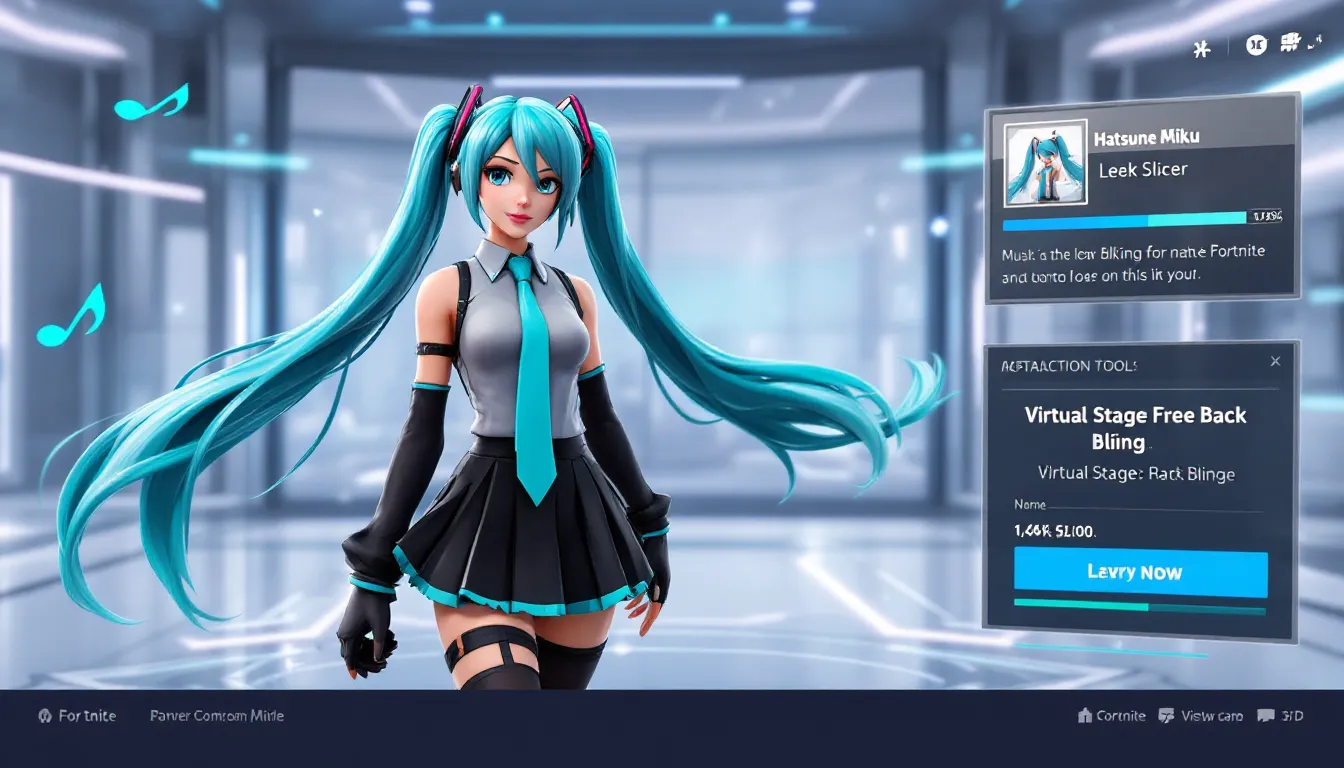
Classic Miku: The default look everyone recognizes, turquoise twin-tails, sleeveless grey top with a cyan tie, black pleated skirt, and detached sleeves. This version stays faithful to the original 2007 design by illustrator KEI, complete with thigh-high boots and her iconic color palette.
-
Future Tone Miku: Inspired by the arcade rhythm game Hatsune Miku: Project DIVA Future Tone, this variant features a sleeker, more modern outfit with holographic accents and a streamlined silhouette. The color scheme shifts slightly toward neon blues and whites, giving her a futuristic vibe that fits Fortnite’s sci-fi aesthetic.
-
Cyber Songstress Miku: An exclusive Fortnite-original design, this style leans into a cyberpunk theme with armored elements, glowing circuit patterns, and a more battle-ready appearance. Her twin-tails gain digital particle effects, and the outfit incorporates black and cyan tech armor. It’s the most “Fortnite-ified” of the three, built specifically for the game rather than pulled from existing Miku media.
All three styles are unlockable immediately upon purchase if you buy the bundle. If you bought the standalone skin, you can pick up the styles later if they appear separately in the shop, though Epic hasn’t confirmed whether they’ll sell them individually.
The level of detail on each variant is impressive, texture work on the sleeves, reactive lighting on the Cyber Songstress style, and even subtle animations when she moves. Players have noted that the Classic style tends to be the most popular for screenshots and content creation, while the Cyber variant sees more use in actual matches due to its slightly less vibrant color scheme (though let’s be real, a turquoise-haired anime girl isn’t exactly tactical camouflage either way).
Complete Miku Cosmetic Set Breakdown
Back Bling and Accessories
The Virtual Stage back bling is a miniature holographic concert stage that floats behind Miku, complete with animated lights and occasional musical note particles. It’s reactive, meaning it pulses and glows in sync with certain emotes, particularly the built-in Mikuwave emote. The design is relatively compact, so it doesn’t obstruct your view during gameplay, but it’s flashy enough to make a statement.
There’s also a secondary back bling option called Neon Soundwave, sold separately for 400 V-Bucks during the initial launch window. This one’s more abstract, a floating set of audio waveforms that shift colors based on your movement speed. It’s compatible with other skins too, making it a solid pickup for anyone building a music or tech-themed locker.
Harvesting Tool and Pickaxe Design
The Leek Slicer harvesting tool is an absolute meme come to life. For those outside Miku lore, she’s famously associated with leeks (specifically the vegetable negi) due to a viral 2007 video of her character spinning a leek while singing “Ievan Polkka.” Epic leaned into this hard.
The pickaxe is a giant holographic leek that leaves a trail of musical notes when you swing it. On impact, it plays a satisfying synth note that changes pitch slightly with each hit. It’s goofy, it’s iconic, and honestly, it’s one of the most entertaining harvesting tools released in Chapter 5. Competitive players might find the audio cues distracting, but for casual matches or Creative, it’s pure fun.
Emotes, Gliders, and Other Cosmetics
The Mikuwave emote is the crown jewel of the set. When activated, your character performs a short dance routine set to a remix of one of Miku’s signature songs (the specific track varies, but it’s typically a snippet from “World is Mine” or “Tell Your World”). The emote is built-in, meaning it’s exclusive to the Miku skin and triggers special effects, the Virtual Stage back bling activates fully, holographic projections appear around her, and the audio mix is unique to this emote.
The Melodic Descent glider is styled like a pair of oversized holographic headphones with turquoise accents and animated sound waves rippling across the surface. It’s one of the more visually distinct gliders in recent memory and pairs well with other music-themed skins beyond just Miku.
Epic also included a loading screen featuring artwork of Miku in her Fortnite debut, available as part of the bundle. It’s a nice touch for collectors, though loading screens don’t get as much attention as they used to now that load times on current-gen consoles and PC are so fast.
Rounding out the set are a spray and banner icon, both featuring Miku’s silhouette and logo. Standard fare for crossover sets, but completionists will want them for the full collection. Many gaming news outlets, including those covering character collaborations and crossover guides, highlighted the Miku set as one of the most comprehensive anime crossovers Fortnite has executed.
Best Combos and Loadouts for the Miku Skin
Matching Back Blings from Other Sets
If you don’t own the Virtual Stage or want to mix things up, several back blings from other sets pair surprisingly well with Miku:
- Holographic Feline (from the Cyber Infiltration Pack): The holographic aesthetic matches Miku’s Future Tone style perfectly, and the cyan/purple color scheme complements her twin-tails.
- Retro Sci-Fi (originally from the Tron crossover): The neon grid design plays into the digital idol theme without clashing.
- Ghost Portal (Chapter 4, Season 4 Battle Pass): For players who want a more mystical vibe, the floating spectral portal adds an ethereal quality that contrasts nicely with Miku’s bright design.
- Love Wings (Valentine’s Day set): Simple, iconic, and the pink-white gradient doesn’t fight with Miku’s turquoise palette.
Some players go minimal and run no back bling at all, letting Miku’s detailed outfit stand on its own. The detached sleeves and flowing twin-tails have enough visual interest that you don’t necessarily need extra accessories.
Complementary Pickaxes and Gliders
Beyond the included Leek Slicer, these harvesting tools work well thematically:
- Star Wand (icon series): The simple star-on-a-stick design is clean and doesn’t overpower Miku’s aesthetic. Plus, the rainbow trail has a playful vibe that matches her energy.
- Vision (Astro Assassin set): The glowing katana with cyan accents fits the anime theme and the color matches her twin-tails almost perfectly.
- Axe-Tral Form (Astral set): Another minimal option with holographic effects that sync well with the Future Tone variant.
For gliders, if you’re not using Melodic Descent:
- Plasma Carrot (Glow-Up set): Ridiculous, but pairs with the Leek Slicer if you’re going for maximum meme energy.
- Starlight Striker (Festival Lights set): The musical theme continues, and the color options let you match any of Miku’s three styles.
- Neon Pulse (Creative Warriors set): Clean, simple, and the cyan lighting ties everything together.
The Fortnite community on platforms discussed in guides and tier list articles has also experimented with pairing Miku with wraps like Prism or Digital Grayscale for a cohesive techno-pop loadout.
Community Reactions and Fan Reception
The Miku skin launched to overwhelmingly positive reception, particularly from anime and J-pop communities who’d been waiting years for this kind of representation in Fortnite. Social media exploded with fan art, combo showcases, and clips of players using the Mikuwave emote in Victory Royales. The crossover trended on Twitter for three consecutive days after launch, with “Hatsune Miku” and “Fortnite” both hitting trending topics globally.
Content creators went wild. Streamers like SypherPK and Ninja showcased the skin in their videos, even if they weren’t personally familiar with Miku beforehand. Meanwhile, Vocaloid-focused YouTubers and TikTokers flooded their channels with Fortnite content for the first time, creating a fascinating crossover of audiences.
Some longtime Fortnite players initially balked at the anime aesthetic, but even skeptics admitted the quality of the cosmetics was undeniable. The built-in emote and reactive elements set a high bar for future crossovers. A few complaints surfaced about the 2,800 V-Bucks bundle price point, but most agreed it was reasonable given the volume of content included.
Interestingly, the skin saw heavy use in competitive modes even though its bright colors. Several pros ran Miku in FNCS qualifiers just for the novelty, and at least one team wore the skin during a tournament stream, generating buzz in esports coverage and community highlights. The sentiment seemed to be: if you’re confident enough to run a turquoise-haired pop star in a cash tournament, you’re making a statement.
The only major criticism came from Vocaloid purists who felt the Cyber Songstress style strayed too far from Miku’s established design language. Epic defended the choice as a way to make her feel native to Fortnite’s universe rather than just a guest character. Most fans appreciated having options, Classic for authenticity, Cyber for gameplay.
Why the Miku Skin Matters for Fortnite’s Crossover Strategy
The Hatsune Miku collaboration represents a strategic shift in how Epic Games approaches crossovers. Rather than focusing exclusively on Western IP, Marvel, DC, Star Wars, this partnership signals a commitment to courting global audiences with culturally specific content.
Anime collaborations aren’t new to Fortnite. Naruto, Dragon Ball, and My Hero Academia all performed exceptionally well in terms of sales and engagement. But Miku is different. She’s not a shonen protagonist with mainstream name recognition outside anime circles. She’s a niche icon who happens to have a fiercely dedicated global fanbase. Epic betting on that fanbase, and winning, proves there’s appetite for deeper cuts from Japanese pop culture.
From a business perspective, the Miku skin opened doors for future Vocaloid and virtual idol collaborations. There’s already speculation about potential partnerships with VTubers, virtual bands like K/DA (a second round after the initial League of Legends crossover), or even other Crypton Vocaloids like Kagamine Rin and Len.
The crossover also demonstrated Epic’s willingness to invest in custom content rather than just slapping existing character models into the game. The Cyber Songstress variant, the built-in emote with original choreography, and the in-game concert event all required significant development resources. That level of commitment suggests Epic views these partnerships as long-term brand investments, not just quick cash grabs.
For players, it means the locker keeps getting more diverse. Whether you’re into superheroes, anime, music, sports, or retro gaming, there’s increasingly something for everyone. The Miku skin proved that Fortnite’s crossover strategy can successfully stretch beyond the obvious choices and still generate massive hype.
Will the Miku Skin Return to the Item Shop?
Here’s the million V-Buck question: when (or if) will Miku come back?
Epic hasn’t officially confirmed return dates for the Miku set, but historical patterns with Icon Series and major crossover skins offer some clues. Skins like the Naruto set, Goku, and even Travis Scott have returned to the shop multiple times, typically spaced 2-4 months apart for the first year after launch. After that, appearances become less predictable, some skins return annually, others vanish for extended periods.
Given Miku’s popularity and the fact that it’s not a Battle Pass exclusive, there’s no reason to believe it won’t rotate back eventually. Epic tends to re-release high-demand skins during special events, holidays, or when new content in the same theme drops. If Fortnite announces another music-focused season or event, expect Miku to show up.
Dataminers suggest the skin is flagged in the files as a standard Item Shop rotation cosmetic rather than a limited-time exclusive, which is a good sign for anyone who missed the initial drop. But, there’s no official countdown or confirmed schedule.
If you’re on the fence about grabbing her when she returns, keep in mind that crossover skins sometimes increase in perceived value over time as they become rarer in lobbies. Missing out once means potentially waiting months for another shot, and there’s always the risk (but small) that licensing agreements complicate future releases.
Your best bet: follow Fortnite’s official Twitter, check Item Shop leak accounts, or set up alerts through community tools that track skin rotations. When Miku does return, you’ll likely have 24-48 hours to make your purchase before she cycles out again.
Conclusion
The Miku Fortnite skin is more than just another crossover, it’s proof that Epic Games can successfully bridge gaming, music, and anime culture in a way that feels authentic rather than forced. Whether you’re drawn to the nostalgic Classic style, the sleek Future Tone variant, or the game-original Cyber Songstress design, there’s a version of Miku that fits your vibe.
For collectors, the full bundle offers solid value with unique cosmetics that hold up months after release. For casual players, even just the base skin provides enough visual flair to stand out in lobbies without very costly. And for Vocaloid fans, seeing Miku in Fortnite validates years of hoping your favorite virtual idol would finally get mainstream gaming recognition.
Keep an eye on Item Shop rotations if you missed her the first time around. Based on Epic’s track record with other major crossovers, she’ll be back, it’s just a matter of when. Until then, players rocking the turquoise twin-tails are part of a crossover that genuinely mattered, both to Fortnite’s evolving identity and to the broader intersection of gaming and global pop culture.