Table of Contents
ToggleFew Fortnite skins have left a legacy quite like Dire. Released during Season 6, the “Darkness Rises” season, this progressive werewolf outfit became an instant fan favorite, blending transformation mechanics with gothic horror aesthetics. Unlike static cosmetics, Dire evolved over time, shifting from a human form into a full-fledged werewolf as players accumulated XP. That progression system gave players a reason to grind beyond tier unlocks, creating a sense of ownership and achievement that’s rare in battle royale cosmetics.
In 2026, Dire remains one of the most recognizable and sought-after skins in Fortnite’s history. You can’t grab it from the Item Shop, you can’t earn it through challenges, and Epic hasn’t brought it back. That exclusivity has only amplified its mystique. Whether you’re a returning player curious about what you missed or a collector researching vintage skins, this guide covers everything from unlock requirements to styling options and why Dire still pops up in lobbies years after its debut.
Key Takeaways
- Dire is an exclusive Season 6 legendary skin featuring a groundbreaking progressive werewolf transformation system across six stages, unlocked only through completing the Battle Pass and earning 250,000 XP, making it permanently unavailable in 2026.
- The Dire skin’s progressive evolution mechanic rewarded dedicated players with visible character transformations tied to seasonal gameplay, setting a precedent that Epic Games refined for future Battle Pass cosmetics.
- Dire remains one of Fortnite’s most iconic and sought-after skins due to its status symbol appeal, gothic horror aesthetic that matched the ‘Darkness Rises’ season narrative, and community recognition as a top-10 Battle Pass cosmetic of all time.
- Players can customize Dire across four color variants (default, black, white, and red/orange) and pair it with season-matched back blings and cross-season cosmetics for unique gothic-themed looks that still pop in modern lobbies.
- Account trading or purchasing Dire violates Epic’s Terms of Service and carries significant risks including permanent bans, scams, and security concerns, making it an unreliable path to obtaining the exclusive skin.
- Alternative werewolf-themed skins like Hybrid, Feral, Big Bad, and Fenrir are available through current Item Shops and Battle Passes for players seeking similar aesthetics without Dire’s rarity and legacy status.
What Is the Dire Skin in Fortnite?
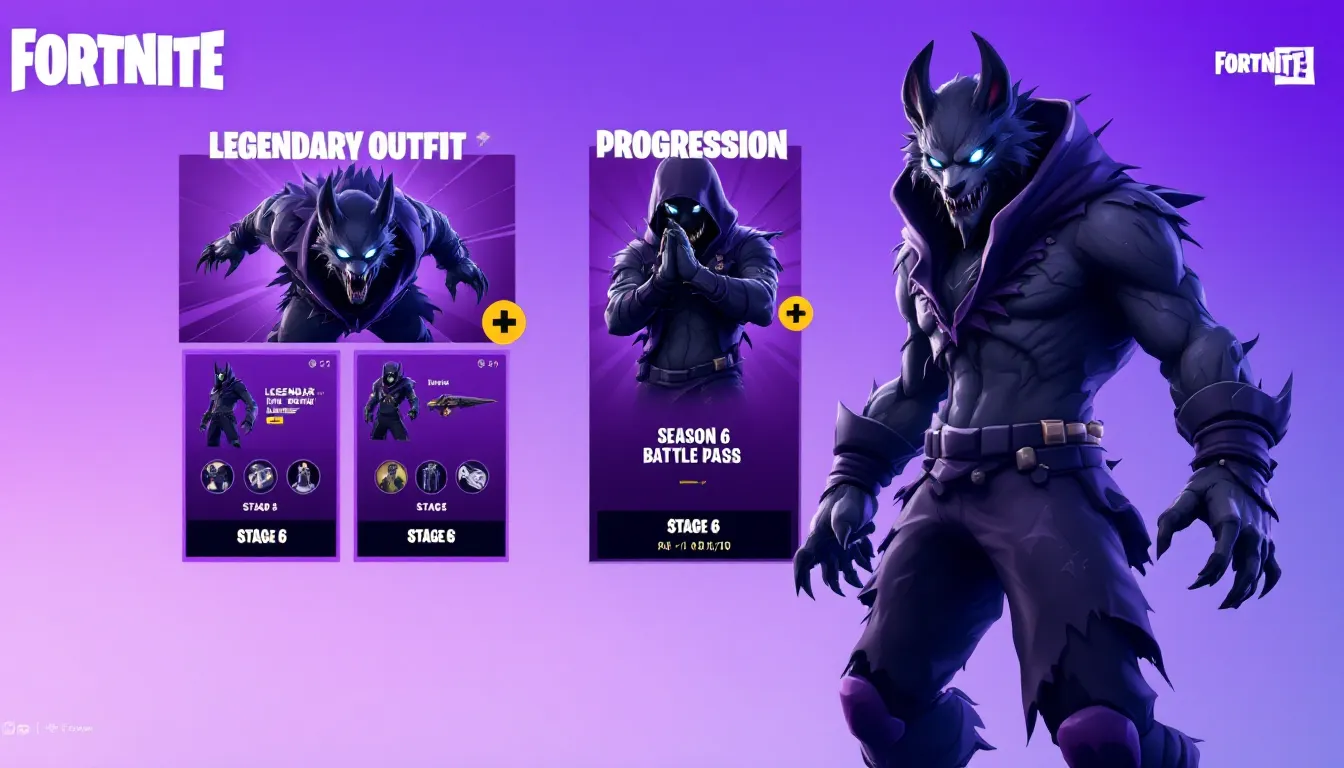
Dire is a Legendary outfit introduced in Fortnite’s Season 6 Battle Pass as the tier 100 reward. Unlike many tier 100 skins that arrived fully formed, Dire launched with a progressive unlock system that transformed the character across six distinct stages. Players started with a human wearing a hoodie and tactical gear, then watched as wolf features emerged, claws, fur, glowing eyes, until they unlocked the final feral werewolf form.
This wasn’t just cosmetic variety. The transformation mirrored the season’s Halloween-adjacent theme, which leaned into darkness, creatures, and supernatural threats. Dire was the centerpiece of that narrative, embodying the “Darkness Rises” motif better than any other cosmetic that season.
Origins and Release History
Dire debuted on September 27, 2018, alongside the Season 6 Battle Pass. Epic Games positioned it as the ultimate reward for dedicated players, requiring completion of all 100 tiers plus additional XP grinding to unlock every transformation stage. The skin tied into the season’s broader storyline, which featured a mysterious purple cube (Kevin), floating islands, and shadow creatures.
While Season 6 ran until December 6, 2018, players who owned the Battle Pass could continue progressing Dire’s stages even after the season ended, a quality-of-life feature Epic introduced partway through the season. This meant latecomers or slower grinders weren’t locked out of the final werewolf forms, though they still needed the original Battle Pass.
Progressive Evolution System Explained
Dire’s evolution system was groundbreaking at the time. Instead of unlocking a skin and moving on, players earned XP-based transformation stages that visually altered the character. Each stage required a cumulative total of XP, independent of Battle Pass tier progression. This created a parallel grind: one for tiers, another for cosmetic evolution.
The system rewarded playtime and skill. Casual players might unlock the base Dire skin but never see the full werewolf. Dedicated grinders who prioritized essential strategies hit max stages before the season ended. Epic later reused this mechanic for skins like Calamity (also from Season 6) and continued refining progressive systems in future passes, but Dire was the first to make transformation feel visceral and earned.
How to Unlock the Dire Skin
Unlocking Dire required two things: purchasing the Season 6 Battle Pass and grinding to tier 100. There was no shortcut, no Item Shop alternative, and no alternative path. Players either committed to the season or missed out permanently.
Season 6 Battle Pass Requirements
The Season 6 Battle Pass cost 950 V-Bucks (roughly $9.50 USD if purchased directly). Once acquired, players needed to complete 100 tiers through a combination of:
- Weekly Challenges: Seven challenges per week, each worth Battle Stars (10 per challenge, with a bonus for completing all seven)
- Daily Challenges: Smaller tasks refreshed every 24 hours
- Level-Up Rewards: Passive Battle Stars earned from gaining account XP
- Free Tier Unlocks: Occasionally hidden in the map as secret Battle Stars
Players who bought the Battle Bundle (2,800 V-Bucks) skipped 25 tiers immediately, cutting the grind significantly. Casual players who completed most weekly challenges typically hit tier 100 with a week or two to spare. Those who skipped weeks often needed to purchase remaining tiers with V-Bucks at 150 per tier.
Once tier 100 was reached, Dire unlocked in his base human form. The real grind started after that.
XP and Tier Progression Strategy
To maximize tier progression and XP gains simultaneously, experienced players focused on efficiency:
- Squad Up with Friends: Playing with friends who owned the Battle Pass granted shared XP bonuses, stacking up to 40% extra per match
- Prioritize Weekly Challenges: These offered the fastest Battle Star returns for time invested
- Land at Challenge Locations Early: Knocked out objectives while the lobby was hot, minimizing wasted matches
- Play Team Modes: Longer survival times in squads or duos meant more passive XP than dying early in solos
Players optimizing for essential skills often completed tier 100 within the first month, then shifted focus entirely to farming XP for Dire’s transformation stages. The separation between tier progression and skin evolution meant some players hit tier 100 but only unlocked Dire’s mid-stage forms by season’s end.
All Dire Skin Stages and Transformations
Dire’s six stages represented one of Fortnite’s most dramatic visual progressions. Each stage added werewolf features, altering the silhouette, animations, and overall vibe of the character.
Stage-by-Stage Visual Breakdown
-
Stage 1 (Base Form): Human male wearing a black hoodie, torn jeans, and a wolf-themed pendant. Clean-cut, no visible transformation. This was the “before” state.
-
Stage 2 (Claws Emerge): Hands shift to clawed paws, visible even when holding weapons. The hoodie remains, but the transformation has begun.
-
Stage 3 (Partial Fur): Fur spreads across the arms and face. Eyes glow faintly yellow. The character hunches slightly, losing some human posture.
-
Stage 4 (Wolf Head): Full wolf head replaces the human face. Fur covers most of the body. The hoodie stretches to accommodate the bulkier frame.
-
Stage 5 (Full Werewolf): Completely transformed. Massive claws, digitigrade legs, thick fur, and glowing eyes. The hoodie is shredded but still partially visible, tying the look back to the human origin.
-
Stage 6 (Max Werewolf): The final form. Slightly bulkier than Stage 5, with enhanced fur detail and more pronounced muscle definition. This is the version most players associate with Dire.
Many players noted that Stages 5 and 6 looked similar at a glance, but Stage 6 featured subtly refined textures and a more aggressive stance animation.
XP Requirements for Each Stage
Epic never published exact XP totals publicly, but dataminers and community trackers reverse-engineered the thresholds:
- Stage 1: Unlocked at tier 100 (0 additional XP)
- Stage 2: 15,000 XP
- Stage 3: 35,000 XP (cumulative)
- Stage 4: 75,000 XP (cumulative)
- Stage 5: 150,000 XP (cumulative)
- Stage 6: 250,000 XP (cumulative)
Reaching Stage 6 required roughly 250,000 XP beyond unlocking the skin itself. For context, an average match with a few eliminations and decent placement awarded 800–1,200 XP. That meant somewhere between 200–300 matches post-tier 100 to max out Dire, assuming no XP boosts. Players who grinded top strategies often completed it within two weeks of hitting tier 100.
Unlocking Dire’s Selectable Styles
Beyond the six transformation stages, Dire offered selectable color styles that let players customize the werewolf’s appearance. These weren’t automatically unlocked, they required completing specific Season 6 challenges.
Color Variants and How to Get Them
Dire featured four color variants:
- Default (Brown/Grey): Unlocked automatically with the base skin
- Black: Unlocked by completing 5 weekly challenge sets
- White: Unlocked by completing 7 weekly challenge sets
- Red/Orange: Unlocked by completing all 10 weekly challenge sets
The red/orange variant, often called “fire wolf” by the community, became the rarest and most coveted. Only players who completed every weekly challenge during Season 6 could unlock it. Since Epic released 10 weeks of challenges over the season’s 10-week runtime, missing even one week meant missing the final color unless players caught up later.
These styles applied across all six transformation stages, meaning a player could rock a white-furred Stage 6 werewolf or a black-furred Stage 3 hybrid. The flexibility gave Dire serious replay value long after unlocking the final stage.
Weekly Challenge Completion Guide
Each week introduced seven new challenges, split into Free Pass and Battle Pass tiers. Only Battle Pass challenges counted toward Dire’s color unlocks. Typical challenge types included:
- Eliminations: Get kills in specific locations or with certain weapon types
- Search Challenges: Find hidden items or interact with objects across the map
- Damage Challenges: Deal X damage with shotguns, SMGs, etc.
- Survival Challenges: Survive a set number of minutes or place top 10 in multiple matches
- Treasure Maps: Follow cryptic clues to secret locations
Players who focused on challenges efficiently knocked out all seven in 2–3 hours per week. Guides on platforms like ProSettings helped players optimize routes and loadouts for speed. The final color unlock required completing all 70 Battle Pass challenges across the season, a feat roughly 30–40% of Battle Pass owners achieved based on community polls.
Best Back Blings and Combos for Dire
Dire’s bulky werewolf silhouette and thematic flexibility opened up tons of cosmetic combo possibilities. Players experimented with everything from Season 6 items to cross-season mashups that highlighted the skin’s gothic horror vibe.
Matching Season 6 Items
Several Season 6 cosmetics paired naturally with Dire:
- Wolfpack Back Bling: The most obvious match. This black and red wolf-themed backpack came as Dire’s built-in back bling. It scaled with transformation stages, making it feel cohesive across all forms.
- Dark Engine: A mechanical back bling from the Season 6 Battle Pass. Its dark metal and purple accents matched Dire’s supernatural theme without being too literal.
- Shackled Stone: Also from Season 6, this stone tablet with chains leaned into the cursed/supernatural aesthetic that defined the season.
- Night Cloak: A black cape that flowed well with Dire’s animations, especially in the final werewolf stages where the movement became more aggressive.
For pickaxes, Lamp (a lantern on a pole) and Fang Saws (dual chainsaw-like blades) were community favorites. Both reinforced the gothic horror vibe without clashing with Dire’s color palette.
Community-Favorite Cosmetic Pairings
Beyond Season 6 items, players discovered cross-season combos that elevated Dire’s look:
- Runic Back Bling (from later seasons): Glowing runes on a dark background matched Dire’s glowing eyes and supernatural energy
- Ominous Orb: A floating purple orb that mirrored Season 6’s Kevin the Cube storyline, tying Dire back to that season’s lore
- Frozen Shroud (from the Frozen Legends pack): White and icy blue tones paired perfectly with Dire’s white color variant, creating a frost wolf aesthetic
- Skull Trooper’s Ghost Portal: The green portal back bling from another Halloween-themed skin created a spectral werewolf combo that popped in lobbies
Some streamers on platforms like Dexerto showcased wildly creative combos, pairing Dire with bright, contrasting cosmetics like the Brite Bag or Rainbow Smash pickaxe for comedic effect. While these broke thematic consistency, they made Dire stand out in crowded endgames where visual clarity mattered.
Can You Still Get Dire in 2026?
Short answer: no. Dire was exclusive to the Season 6 Battle Pass, and Epic has never re-released Battle Pass skins. Once a season ends, those cosmetics are vaulted permanently. That exclusivity is a core part of Epic’s Battle Pass model, rewarding players who participated during specific seasons while creating FOMO for future passes.
Account Trading and Purchasing Risks
Some players consider buying or trading accounts that own Dire. This comes with serious risks:
- Terms of Service Violations: Epic’s ToS explicitly prohibits account selling and trading. Accounts involved can be permanently banned.
- Scams: The secondary account market is riddled with fraud. Sellers often reclaim accounts after payment, change passwords, or sell the same account to multiple buyers.
- Security Concerns: Purchased accounts rarely come with original email access, making recovery nearly impossible if the seller decides to take it back.
- No Customer Support: Epic won’t help recover or restore purchased accounts. If something goes wrong, the money is gone.
Prices for accounts with Dire vary wildly, ranging from $50 to several hundred dollars depending on what else the account includes. Given the risks, most experienced players advise against it. The temporary thrill of owning Dire isn’t worth a potential ban or financial loss.
Similar Alternative Skins Available Now
If you’re drawn to Dire’s werewolf aesthetic but can’t access the original, several alternatives offer similar vibes:
- Hybrid: A Season 8 Battle Pass skin with a ninja-werewolf theme and progressive unlocks. Like Dire, it transformed across multiple stages.
- Feral: A Rare outfit from the Item Shop featuring a punk-rock werewolf look. Less detailed than Dire but more accessible.
- Big Bad: A Chapter 4 skin with a fairy-tale-inspired wolf theme. Bulkier and more stylized than Dire but captures the monster aesthetic.
- Fenrir: A Norse mythology-inspired wolf skin from later seasons. More armor-heavy but still hits the werewolf fantasy.
These alternatives pop up in the Item Shop periodically or appear in newer Battle Passes. While none carry Dire’s legacy, they scratch the werewolf itch for players who missed Season 6. Tracking shops through essential resources helps players catch these skins when they rotate back in.
Why Dire Remains One of Fortnite’s Most Popular Skins
Years after Season 6 ended, Dire still shows up in lobbies, montages, and community tier lists. Its staying power comes from a mix of nostalgia, mechanical innovation, and cultural resonance within Fortnite’s history.
Community Reception and Legacy
When Dire launched, community reaction was mixed. Some players loved the transformation gimmick and gothic horror theme. Others felt the final stages looked too bulky or the grind was excessive. By Season 7, opinions shifted. Players realized they’d witnessed something rare: a skin that felt earned rather than purchased.
Dire became a status symbol. Seeing a max-stage Dire in a lobby in 2019 meant the player had committed serious time to Season 6. It signaled experience and dedication. Even as Fortnite’s art style evolved toward more flashy, Marvel-crossover-heavy cosmetics, Dire retained its identity as a grounded, player-driven unlock.
Community polls on Reddit and Twitter consistently rank Dire in the top 10 Battle Pass skins of all time. It’s mentioned alongside icons like Omega, Black Knight, and The Reaper (John Wick). That longevity is rare. Most skins fade from conversation within a season or two. Dire stuck because it represented a specific moment in Fortnite’s evolution, when Epic was still experimenting with cosmetic progression and seasonal storytelling.
Competitive and Streaming Popularity
In competitive circles, Dire has a niche following. Its bulkier hitbox silhouette doesn’t affect actual gameplay (all Fortnite skins share the same hitboxes), but some pros avoid it for visibility reasons. The final werewolf stages can obscure peripheral vision slightly during intense build fights, especially on lower FOV settings.
Even though that, several high-profile streamers and content creators still run Dire regularly. It’s appeared in viral clips, tournament highlights, and meme compilations. The skin’s aggressive animations, especially the final stage’s hunched sprint, add personality to gameplay footage in a way cleaner skins don’t.
On The Loadout, retrospective articles about Fortnite’s best cosmetic designs frequently highlight Dire as a turning point in Epic’s approach to Battle Pass value. It proved players would grind beyond tier 100 if the reward justified the effort, a lesson Epic applied to every Battle Pass since. Understanding what drives top players to choose certain skins reveals that legacy often trumps pure meta optimization.
Conclusion
Dire stands as one of Fortnite’s defining cosmetics, a skin that married thematic ambition with mechanical innovation and rewarded dedication in ways few others have. The progressive transformation system set a precedent Epic still references in modern Battle Passes, while the werewolf aesthetic captured a specific moment when Fortnite leaned hard into seasonal storytelling and horror themes.
In 2026, you won’t find Dire in the Item Shop or earn it through challenges. It’s locked behind Season 6’s Battle Pass, a relic of Fortnite’s third year. But its legacy persists in community discussions, tier lists, and the occasional lobby sighting that reminds players what they missed, or what they earned. Whether you’re researching vintage skins or just curious why a seven-year-old cosmetic still gets mentioned, Dire proves that great design and meaningful progression never go out of style.